
Agentic Optimisation (AO)

Agentic Optimisation (AO) makes your website’s data directly discoverable and actionable by AI...

Why a #3 Google ranking gets zero clicks in AI search → Read the AI SEO Paradox
What changed in Google's September 2025 algorithm update? Google's September 2025 core update introduced five major shifts: AI-powered content quality classifiers, a formal desktop/mobile ranking split, the elimination of keyword manipulation, stronger geographic authority signals for local search, and stricter Google Merchant Centre enforcement for e-commerce. Australian SMEs face the sharpest impact from increased competition from national and global brands for AI-generated answers.
I've tracked every Google algorithm update for over 15 years and tested these changes across Wollongong, Illawarra, and broader NSW client sites. What September 2025 brought is genuinely different — not incremental refinement, but a structural shift in how Google evaluates content, local authority, and mobile experience. This guide is what I wish had existed when the update hit.
Google's September 2025 algorithm marks a decisive shift to AI-enhanced ranking signals and experience-driven metrics. The update formally splits desktop and mobile rankings, reinforces Core Web Vitals as primary mobile signals, and deploys AI-powered evaluation of content quality, authenticity, and local relevance. These changes place Australian SMEs — already competing against Sydney agencies and global platforms — on the frontline of algorithmic pressure.
Sophisticated classifiers now identify and penalise low-quality AI content whilst rewarding high-quality AI-assisted work
Desktop and mobile rankings now diverge significantly, requiring separate optimisation strategies
Keyword manipulation eliminated; intent-based, semantic content now dominates
Geographic authority signals strengthened with community connections and local engagement
Stricter product feed requirements and Merchant Centre compliance standards
Google's systems now pinpoint human-curated, high-quality AI content — penalising anything repetitive, formulaic, or spammy. The algorithm distinguishes between thoughtful AI-assisted content and mass-produced spam with increasing accuracy. The key distinction: who added value, not which tool was used.
Unique insights, original data, first-hand experience vs rehashed information
Clear authorship, verifiable expertise, transparent editorial oversight
Verifiable claims, proper citations, no AI "hallucinations"
Natural writing flow vs formulaic AI templates
Comprehensive coverage vs surface-level summaries
Genuine utility vs content created purely for rankings
Australian market specificity, local examples, and regional insights create AI-resistant value that generic content cannot replicate. A blog post about "digital marketing tips" is indistinguishable from a thousand others. A post about "how Wollongong hospitality venues recovered rankings after the September 2025 update" is unique.
Google has deepened the split between desktop and mobile rankings. Core Web Vitals (LCP, FID/INP, CLS) now carry far more weight in mobile searches than desktop. A page ranking #3 on desktop might rank #8 on mobile if the mobile UX is poor. This is the most significant mobile-desktop divergence since mobile-first indexing began in 2019 — and Australian marketers must now track and optimise each environment independently.
Target: <2.5 seconds
How quickly does the main content load? Slow LCP = immediate mobile ranking penalty. Most Wollongong business sites I audit fail this on mobile.
Target: <200ms INP
How responsive the site feels to user interaction. Sluggish INP = poor mobile experience signal.
Target: <0.1
Visual stability as the page loads. Jumping elements frustrate users and drop rankings on mobile.
Product pages, checkout flows, and location pages face the harshest scrutiny on mobile. E-commerce and local landing pages require distinct mobile UX strategies to avoid drops in mobile visibility.
Keyword stuffing and scaled-content abuse now attract immediate penalties. The September 2025 update represents the death of keyword-centric SEO and the rise of intent-based, semantic optimisation. This isn't a gradual shift — sites relying on keyword density tactics are seeing rapid ranking declines, often within days of the classifier flagging them.
What is the user actually trying to accomplish? Informational, navigational, commercial, transactional? Map the intent before writing a word.
What format, depth, and angle do top-ranking pages use? What are they missing that you can add?
Answer the core question and all related sub-questions. Leave no gaps a competitor could exploit.
Use related terms, synonyms, and contextual language naturally. Write for a person who knows the topic, not for a keyword counter.
Support every claim with data, case studies, visuals, and expert quotes. Assertions without evidence are now a negative signal.
Don't force "Sydney plumber" 15 times on a page. Instead, write comprehensively about plumbing services in Sydney with specific suburbs, common local issues, relevant regulations, and actual client examples. Geographic specificity beats generic "service + location" keyword targeting every time now.
Google's local algorithms now incorporate stronger geographic authority signals: local events, partnerships, reviews, and citations carry significantly more weight. This update rewards businesses that demonstrate genuine community connection and local expertise — not just those with a suburb name in their title tag.
Generic template pages with just location names swapped out no longer work — and now actively hurt you. Google's classifiers flag them as thin duplicate content. Here's what a strong geo-landing page looks like now:
"Welcome to [Company Name] [Location]! We provide [service] in [Location]. Contact us for [service] in [Location] today!"
This template approach is dead. Google recognises these as thin, duplicate content created purely for rankings — and now penalises them rather than simply ignoring them.
Businesses I worked with that listed on local directories, created content around local events, and cross-linked with local partners saw up to 26% more Google Maps impressions within three months of the update. Here's exactly what they did:
The September 2025 update brought stricter enforcement for e-commerce sites. Violations that previously resulted in warnings now trigger immediate product disapproval or account suspension in Google Merchant Centre. Product feed quality, unique product copy, and data synchronisation accuracy are no longer optional — they are baseline requirements for Shopping visibility.
Offer local pickup from Australian locations. Include pickup points in the product schema. "Available for same-day pickup in [suburb]" messaging converts.
Afterpay, Zip Pay, and Klarna are prominently displayed on product pages. "4 payments of $X" messaging. Include in checkout flow with logo treatment.
Encourage reviews that mention the Australian context: "Fast delivery to Melbourne", "Great for Australian conditions", "Arrives before Christmas in QLD".
Clear shipping zones and estimated times. "Free shipping over $X to all Australian metros". Local courier partnerships and tracking links.
Prominent AUD display with GST included. No price surprises at checkout. Compared to typical US/UK prices, where relevant, Australians notice the value.
Emphasise "Australian stock" and "Ships from NSW/VIC". Faster delivery, local warranty, no customs delays — these are real conversion drivers for AU buyers.
Yes. Australian businesses experienced amplified impact because Google's AI Overviews began appearing more frequently in AU search results at the same time, reducing click-through rates to organic listings by an estimated 15–30% for informational queries. Sites that weren't structured for AI citation lost traffic even when their ranking positions didn't change significantly.
Check Google Search Console for traffic drops around 20–25 September 2025. Common signs include: significant impressions remaining but clicks declining, mobile rankings dropping while desktop holds, or product pages being disapproved in Merchant Centre. A site-wide traffic decline of more than 20% over 2–3 weeks during this period is a strong indicator of algorithmic impact.
Yes — but the recovery is content-quality driven, not technical. Unlike manual penalties, algorithmic filters lift automatically when your content quality improves sufficiently. The most effective recovery path involves: humanising AI-generated content, adding original case studies and data, improving mobile Core Web Vitals, and building genuine local authority signals. Recovery typically takes 2–4 months of sustained effort.
No. Google's policy explicitly allows AI-assisted content that demonstrates genuine value, original insight, and clear authorship. What's penalised is scaled content abuse — mass-producing AI content without human editorial oversight, factual verification, or added value. The test is: "Would this content exist and be useful if it hadn't been produced at scale?" If yes, it's likely fine. If it's formulaic content produced purely to capture keyword rankings, it isn't.
Mobile Core Web Vitals, if you haven't already. It's the most technically measurable factor, the most commonly failed by Australian SME sites (particularly those on shared hosting or outdated CMS platforms), and the one with the most direct, measurable impact on rankings. Fix LCP first — most sites can reduce it significantly by converting images to WebP, enabling lazy loading, and moving to faster hosting.
This action plan is prioritised by impact rather than complexity. Start with Step 1 regardless of your business type — the content audit informs everything else.
Run all public pages through Originality.ai or a similar tool. Flag content scoring above 70% AI-generated. Prioritise: homepage, core service pages, product category pages, and any blog posts currently ranking in the top 3 positions.
Test your top 20 pages on actual iPhone and Android devices — not just Chrome DevTools. Check Core Web Vitals in Search Console. Fix LCP >2.5s, FID >100ms, CLS >0.1. Remove intrusive popups on mobile. Tools: Google Search Console, PageSpeed Insights, and real device testing.
List on 15+ local Australian directories beyond GBP. Join your local chamber of commerce. Request suburb-specific reviews from customers. Partner with complementary local businesses. Create content about local events and the community. Target: True Local, Yellow Pages AU, Yelp AU, StartLocal, Local Search, council business directories, and industry-specific directories.
Log in to Google Merchant Centre and fix all existing warnings first. Then rewrite generic product descriptions with unique, value-added copy. Add GTINs for all branded products. Sync prices and availability in real time. Upload high-resolution images with no watermarks. Implement the product schema on all product pages.
Set up device-specific rank tracking immediately. Monitor Search Console performance filtered by device. Identify pages with significant desktop-mobile ranking gaps — these are your highest-priority mobile fixes. Set up alerts for ranking drops greater than 5 positions. Tools: Google Search Console (device filter), GA4 device comparison reports, rank tracking tools with device segmentation.
Top Priority: Step 3 (Local Authority) → Step 2 (Mobile) → Step 1 (Content)
Top Priority: Step 4 (Product Feeds) → Step 2 (Mobile) → Step 5 (Tracking)
Top Priority: Step 1 (Content Audit) → Step 5 (Tracking) → Step 2 (Mobile)
Top Priority: Step 3 (Local Authority) → Step 4 (Product Feeds) → Step 2 (Mobile)
The September 2025 update is the biggest algorithmic shift in years — and it's still actively reshaping Australian search results into 2026. I've helped dozens of Illawarra and NSW South Coast businesses adapt successfully without losing visibility, traffic, or revenue.
Servicing: Wollongong, Shellharbour, Kiama, Dapto, Southern Highlands, and broader Illawarra/NSW South Coast. Remote consulting available for Australian businesses nationwide.
Local expertise. Australian focus. 15+ years of experience. I understand Australian search behaviour, local market dynamics, and how to adapt to algorithm changes without panic or guesswork.
Agentic Optimisation (AO) makes your website’s data directly discoverable and actionable by AI...

Right now, as I write this from our Wollongong office overlooking the harbour, nearly 70% of...

Alternative text (alt text) is one of those technical SEO elements that many Wollongong businesses...

Not that long ago, "AI in marketing" meant a clunky chatbot parked in the bottom-right corner of...
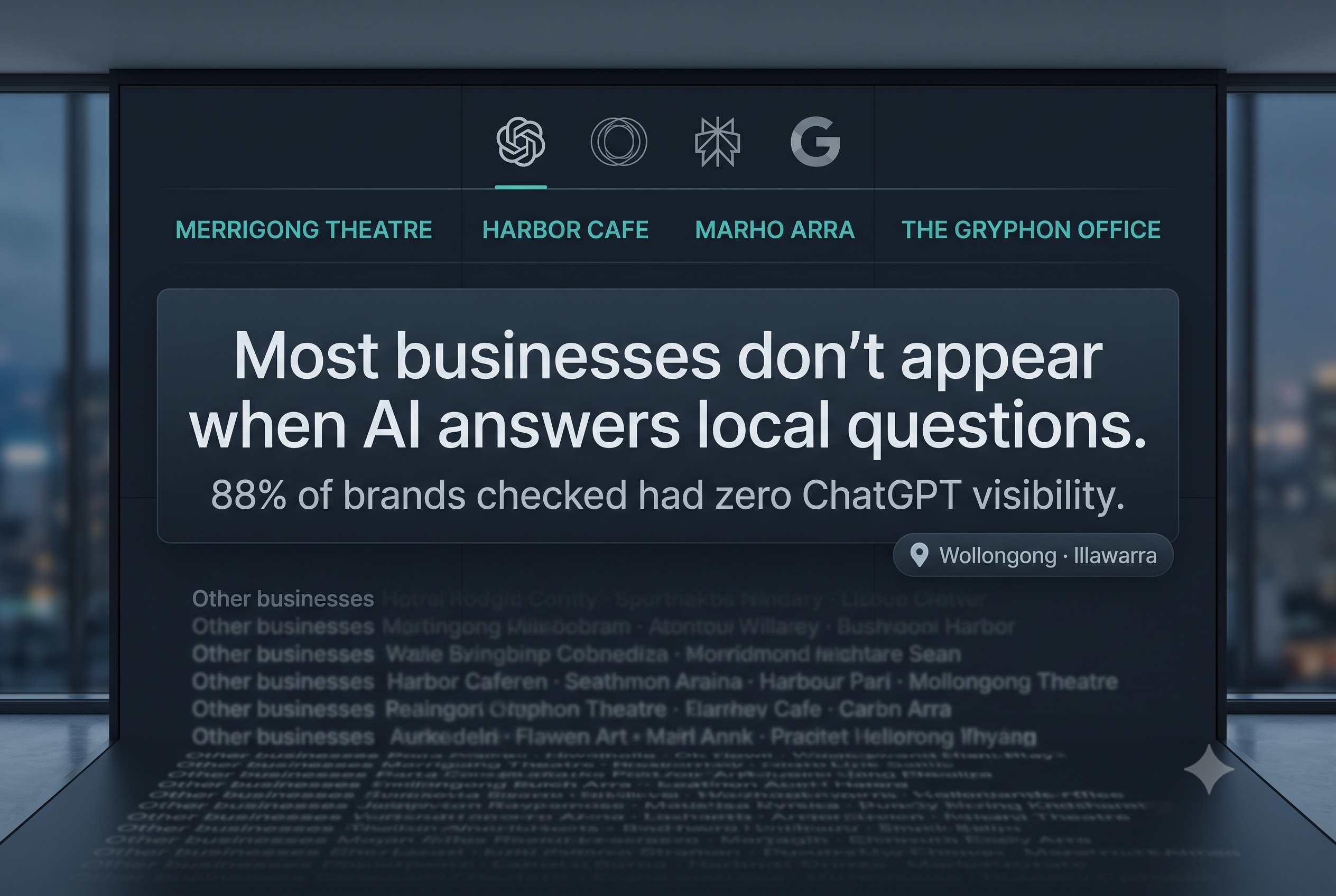
There's a quiet shift happening in how Wollongong customers find businesses. They're not always...

A few years ago, SEO in Wollongong felt like a technical puzzle – keywords, backlinks, site speed, and...

There’s a debate raging inside digital marketing right now. On one side, seasoned SEO...
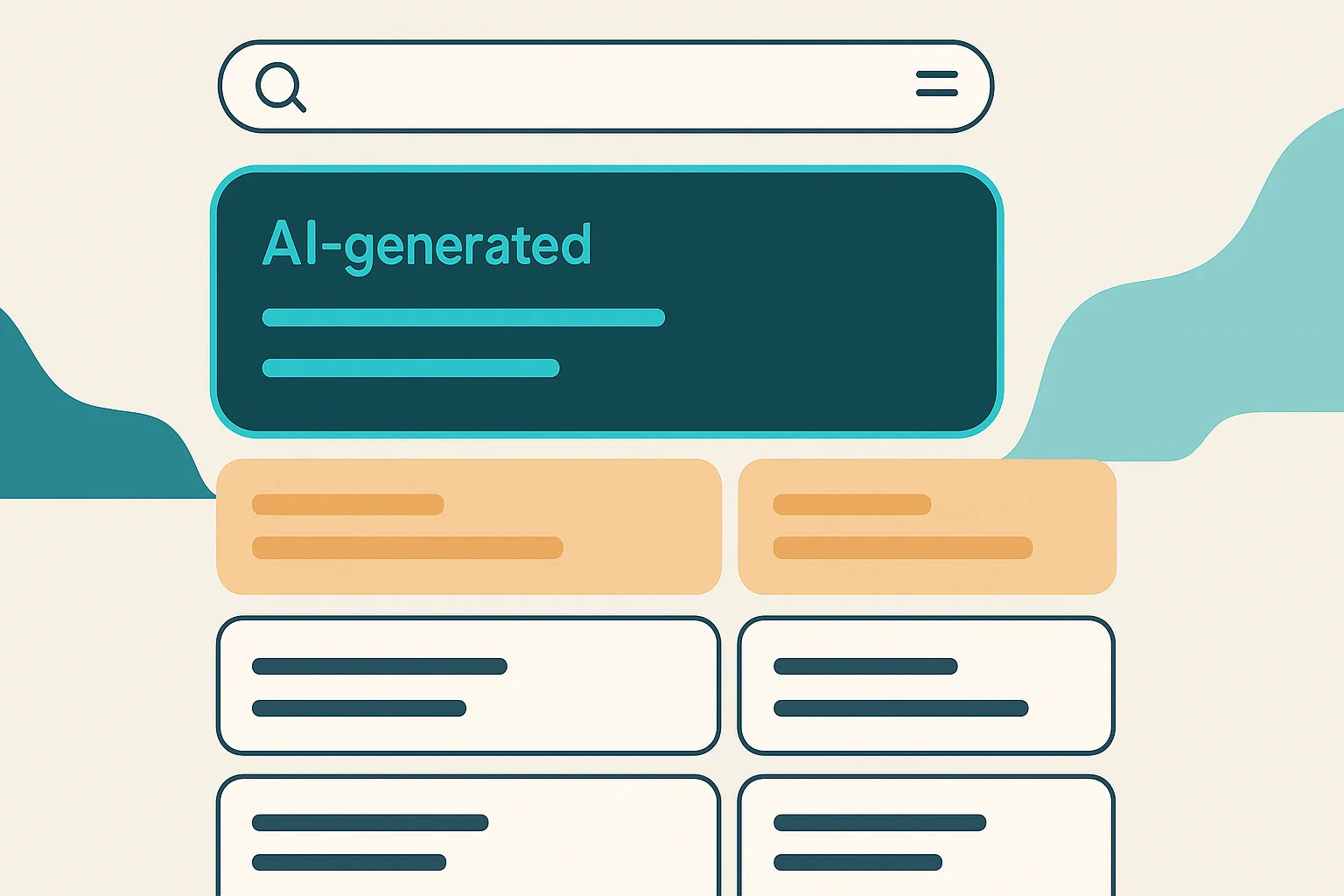
Wollongong marketers are seeing paid CTR plummet as AI Overviews capture queries before ads load. In...

Something subtle but powerful has changed in how Google treats title tags in 2026, and if you're still...
Are we there yet? Like any worthwhile journey, successful SEO and Google rankings are never quick,...

In 2026 Australia, where 85%+ of website traffic comes from mobile devices, responsive web design...
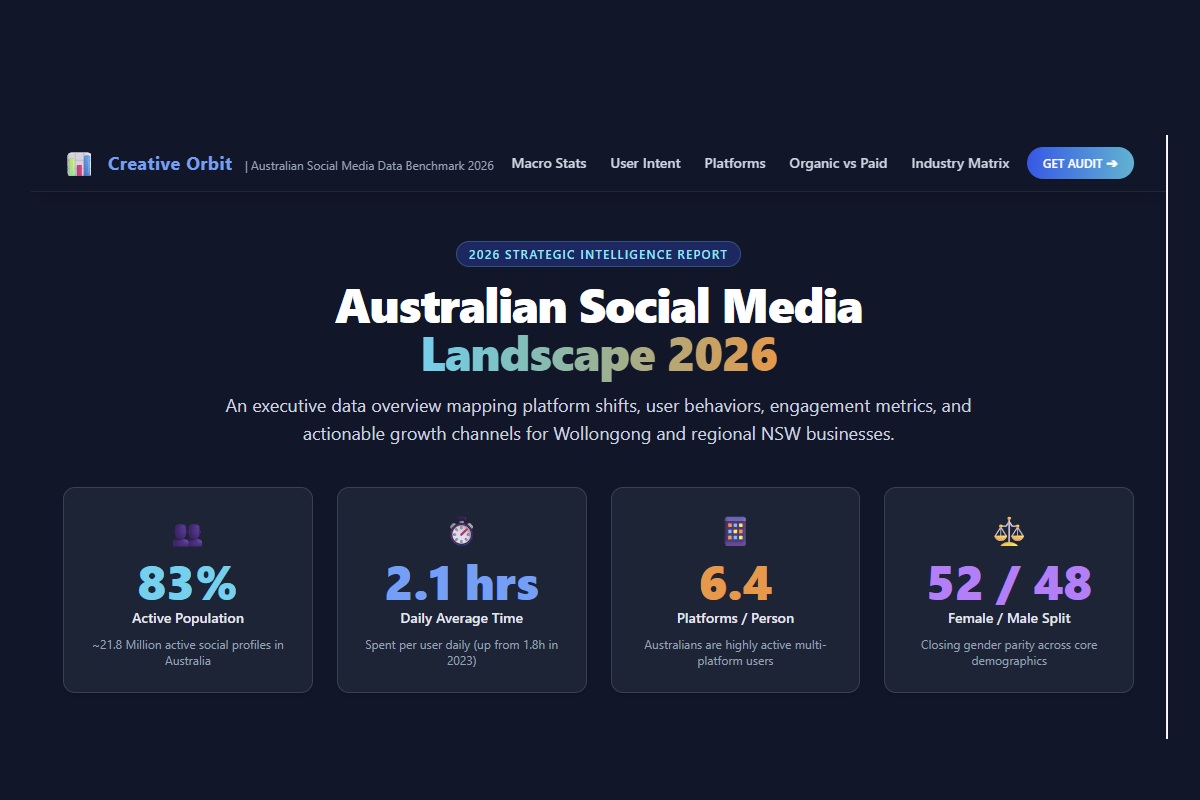
Social media in Australia has fundamentally changed how Wollongong businesses connect with...
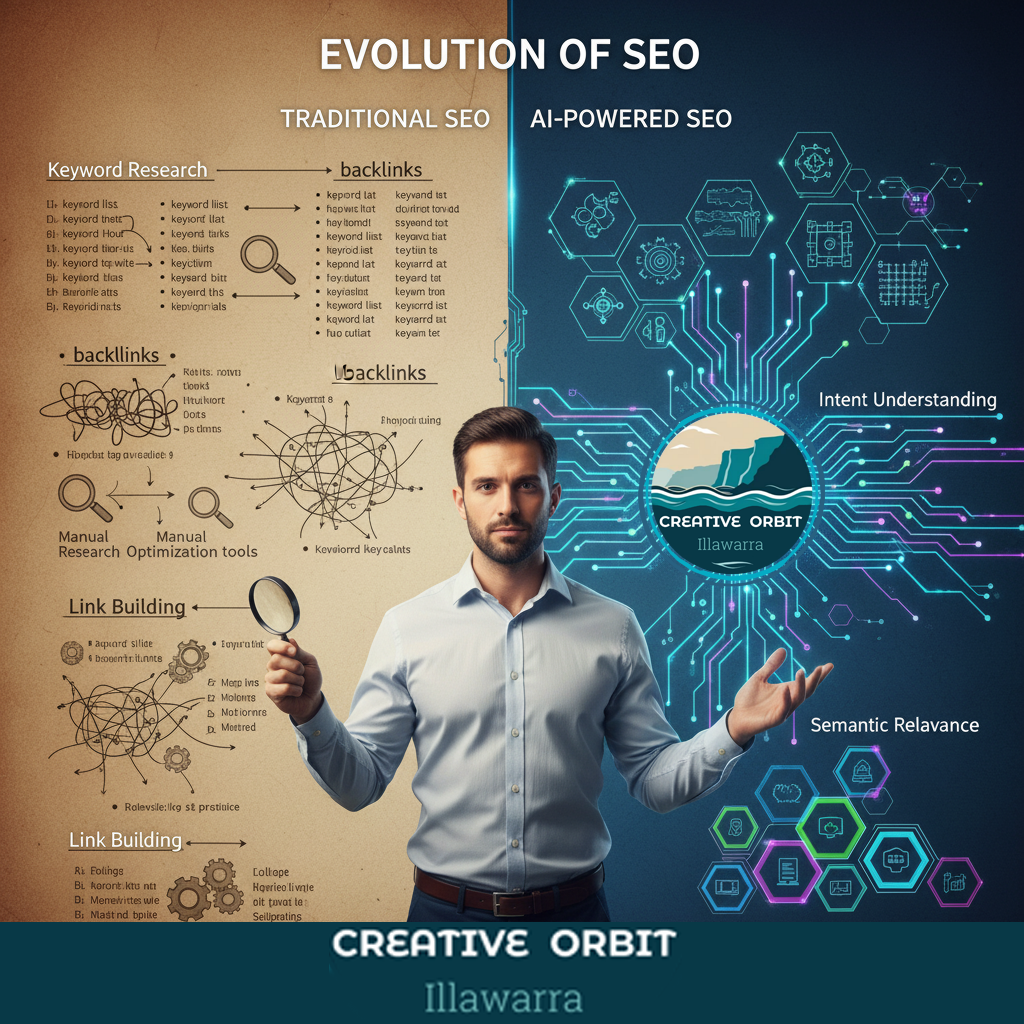
For Wollongong, Sydney and the Illawarra region, the digital landscape isn't what it was even a...

Content strategy in 2025 isn't about churning out more articles - it's about proving you genuinely know...

The new Proximity-Plus algorithm doesn't just look at how far you are from a searcher - it...

Think of this roadmap as your region's business lifeline. Google's "Perspective" update slammed...
This analysis of Google's September 2025 algorithm update is based on extensive research, live testing across Australian client sites in the Illawarra and regional NSW, and continuous monitoring of changes in search behaviour from September 2025 through February 2026. Every claim in this guide is sourced from observable ranking data, Google's own published documentation, or tested outcomes from real client campaigns.
Creative Orbit | Illawarra — Based in Keiraville, Wollongong. Specialising in algorithm recovery, AI-first SEO, and digital strategy for Australian SMEs. 15+ years of SEO experience. Deep local market knowledge across the Illawarra, Southern Highlands, and broader NSW.
I monitor algorithm updates continuously and publish analysis specifically for Australian businesses at AI Insights & Digital Strategy. Subscribe for updates on future algorithm changes and strategic guidance tailored to the Australian market.